Tight Spaces, Big Feelings: How Metro Turned Claustrophobia Into Its Greatest Superpower
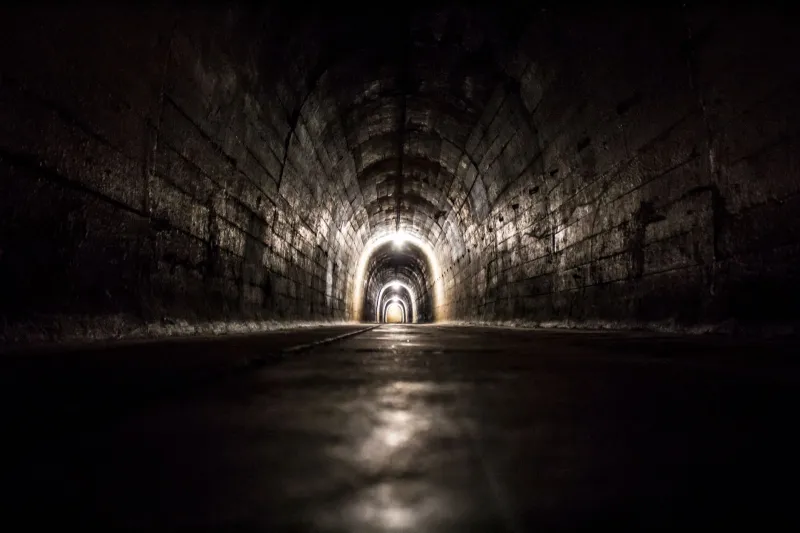
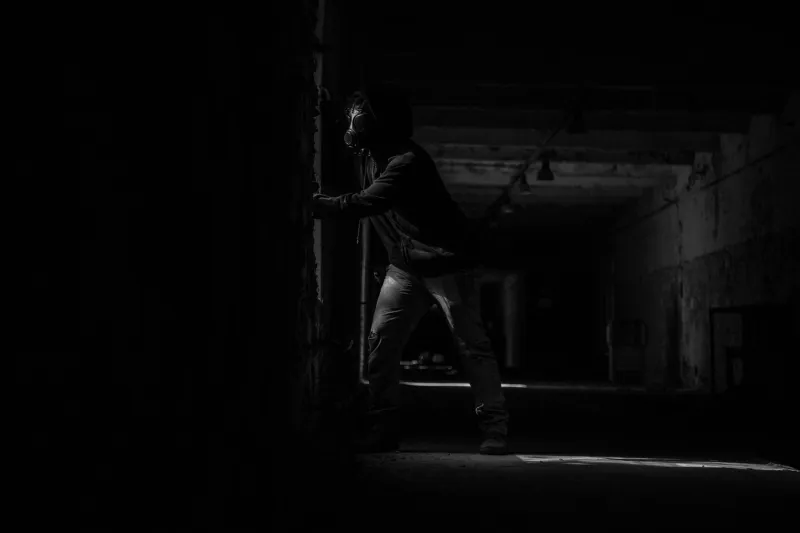
There's a moment early in Metro 2033 where the tunnel just... tightens. The ambient sound drops to almost nothing. Your gas mask fogs up slightly. And somewhere behind you, something shifts in the dark. No waypoint. No minimap screaming at you. Just you, a narrow corridor, and the very real possibility that you made a wrong turn three minutes ago.
That moment doesn't cost hundreds of millions of dollars to produce. It doesn't require a procedurally generated open world or a live-service economy. It just requires trust — trust that the player doesn't need infinite space to feel genuinely, uncomfortably alive.
In 2024, when the default AAA pitch seems to involve some variation of "you can see that mountain, and you can climb it," Metro's design philosophy looks less like a limitation and more like a deliberate, almost radical act.
The Psychology Behind the Panic
Here's something game designers have understood for years but rarely get credit for: restriction creates intimacy. When you can go anywhere, you're everywhere and nowhere at once. When your options narrow to a single dark hallway, your brain stops cataloging possibilities and starts surviving.
Psychologists who study environmental stress call this "attentional narrowing" — the way that confined, threatening spaces force the mind to focus with a sharpness that open environments simply can't replicate. Horror filmmakers have exploited this forever. Think about the difference between a monster loose in a field versus a monster in a submarine corridor. Same monster. Completely different terror.
Metro understood this instinctively. The Moscow Metro system — with its real-world history, its ornate Soviet-era stations, its suffocating depth below the city — wasn't just a convenient setting. It was a psychological instrument. Every low ceiling and water-dripping archway was doing emotional work that no amount of open-world acreage could replicate.
Artyom Isn't a Hero. He's You, Panicking.
One of the underappreciated reasons Metro's storytelling lands harder than most is the way it uses its protagonist. Artyom is not a quippy power fantasy. He doesn't have a catchphrase. For most of the original game, he doesn't even speak. He's a vessel for discomfort, and the confined world around him amplifies every beat of vulnerability.
Compare that experience to, say, navigating a massive open-world RPG where your character cracks jokes while the apocalypse unfolds. The scale of those games — the sheer size of the playground — creates a kind of emotional buffer. When the world is enormous, tragedy feels distant. When the world is a tunnel and you're running low on filters, tragedy feels immediate.
That's the Metro effect in its purest form. The franchise doesn't just ask you to survive — it makes you feel the weight of surviving. Every bullet counts because you counted them. Every safe room feels earned because you needed it.
Linear Isn't a Dirty Word
Somewhere along the way, "linear" became a criticism in gaming discourse. Players and reviewers started treating open-world design as the default measure of ambition, and anything more focused got labeled as "short" or "restrictive." Metro never really bought into that framing, and in hindsight, the franchise looks smarter for it.
Linear design isn't the absence of freedom — it's the presence of intention. Every encounter in Metro's tunnels is placed. Every moment of quiet is deliberate. The pacing is controlled the way a good thriller novel controls it: you don't skip chapters, and you don't wander off into sidequests that dilute the tension.
For American players raised on the Skyrim model — where the whole point is that you can ignore the main quest for 200 hours — this can feel jarring at first. But give it thirty minutes, and something shifts. You stop missing the open world because you're too busy holding your breath.
What Metro Exodus Got Right (and What It Risked)
Metro Exodus represents an interesting case study in this conversation, because it deliberately expanded the series' scope. Semi-open environments replaced the pure tunnel linearity of the first two games, and the reaction from longtime fans was... complicated.
The game was excellent — nobody's arguing that. But some of what made the original Metro entries feel so uniquely suffocating got diluted in the daylight. Open snowfields and riverside towns are beautiful, and Exodus used them well. But when you're standing in the sun with a clear sightline to the horizon, you're playing a different kind of survival game. The intimacy shifts.
Exodus proved Metro could scale up without collapsing. But it also proved, almost by accident, that the tunnel was doing more heavy lifting than anyone fully appreciated until it wasn't there.
Why This Matters in 2024
The gaming landscape right now is fascinating, because players are starting to push back against open-world fatigue in ways they weren't five years ago. Discourse around games like Starfield and certain live-service titles has centered on a pretty consistent complaint: bigger doesn't mean better. More content doesn't mean more meaning.
Metro has been making that argument in playable form since 2010. And as the industry recalibrates — as studios start to rediscover that focused, atmospheric experiences can hit harder than sprawling ones — the franchise looks less like a niche outlier and more like a blueprint.
Small spaces. Real stakes. A world that presses in on you until you can't ignore it.
That's not a limitation. That's a design philosophy worth studying.
The Takeaway for Survival Fans
If you've ever wondered why Metro sticks with you in a way that some bigger, flashier games don't, this is probably why. The franchise earns its emotional weight by making the world feel genuinely dangerous and genuinely small. It doesn't give you room to breathe, and that's the whole point.
Next time you're moving through a dark tunnel, gas mask on, filters ticking down, and you feel that particular flavor of dread settle into your stomach — that's not a design flaw. That's Metro doing exactly what it set out to do, better than almost anyone else in the business.
Survive the darkness. Feel every step of it.