After the Aurora Stops: Where the Metro Franchise Needs to Go Next

Photo by Photo by Florian Olivo on Unsplash on Unsplash
The Aurora pulled into the Valley of the Lakes, the survivors stepped off the train, and Artyom—depending on how you played—either took his last breath or found a reason to keep breathing. Either way, Metro Exodus ended. The credits rolled. And a whole lot of fans were left standing on the platform wondering: okay, but what comes next?
That question has been bouncing around the Metro community ever since Exodus launched back in 2019. 4A Games hasn't exactly been loud about what's coming down the pipeline, which means the floor is wide open for speculation. And honestly? That's half the fun. Let's dig into the dangling threads, the unexplored corners of the lore, and the fan theories that make a compelling case for where this franchise could—and arguably should—go.
The Ending Didn't Close Every Door
Here's the thing about Metro Exodus's conclusion: it's emotionally satisfying, but narratively it's more of a pause than a full stop. The Valley of the Lakes settlement is established, sure. But the world outside that valley is still out there—irradiated, fractured, and crawling with both monsters and surviving human factions that the Aurora crew barely made contact with.
The Caspian Sea region alone felt like it had three more games worth of story buried in its sand. The cult of the Pioneers, the slave trade infrastructure Colonel Khlebnikov built—none of that collapsed just because Artyom and crew drove through on a train. Those power structures don't just evaporate. A sequel could pick up in that region and find a society still mid-transformation, which is a far more interesting dramatic space than a clean rebuild.
And then there's the Hansa-like political structure hinted at through radio transmissions and notes scattered throughout the game. There are organized survivor settlements across Russia that the Aurora never reached. A new story could push east—toward the Ural Mountains, into Siberia, or even further. Dmitry Glukhovsky's extended universe novels gesture at a world that's deeply alive beyond Moscow's tunnels, and 4A Games has barely touched that material in game form.
A New Protagonist Changes Everything
One of the more interesting fan theory camps argues that the next Metro game shouldn't follow Artyom at all—and honestly, they've got a point. Artyom's arc is complete. Whether he survived or not, his story has a shape. Forcing him back into the role of protagonist risks diminishing what made Exodus feel so final.
The better move? Hand the reins to someone new. Anna is an obvious candidate—she's got military training, a sharp personality, and a perspective on the post-apocalyptic world that's entirely different from Artyom's more introspective, spiritually-tinged worldview. A game from her point of view, perhaps set in the years after the Valley settlement gets established, could explore the harder side of building something new: politics, resource wars, the question of whether the old Metro factions will eventually reach out and try to reclaim influence.
Alternatively, a full ensemble cast with rotating perspectives could work. The Metro franchise has always been good at making secondary characters feel like real people—Duke, Damir, Stepan—giving players the chance to inhabit multiple viewpoints in a single narrative would be a bold structural swing that fits the franchise's literary roots.
The Geography Nobody's Explored Yet
Let's talk about the map, because this is where the wishful thinking really gets fun.
Metro Exodus took us from Moscow to the Volga, through the Ural region, into the Caspian desert, and finally to Novosibirsk and beyond. That's a huge swath of Russia, but it's still overwhelmingly westward-focused. The Russian Far East—think Vladivostok, the Pacific coast, the regions bordering China and Japan—is almost entirely untouched in the game's lore.
What happened to those cities? Did the nuclear exchange even hit them as hard? Could there be functioning port communities? Boats? Trade routes across the Sea of Japan? The franchise's original appeal was built on the intimacy of Moscow's metro tunnels, but Exodus proved 4A Games can scale up without losing tension. A coastal or island-based setting would be a genuinely fresh environment while still fitting the survival horror DNA.
There's also the matter of the Dark Ones. The ending of the original Metro 2033 (and its redux version) left their story in a deeply ambiguous place, and Exodus quietly reintroduced that thread with Artyom's visions. A sequel that finally gives players a chance to engage meaningfully with Dark One society—not as a horror element but as a civilization—would be one of the most narratively ambitious things the franchise has ever attempted.
What 4A Games Has Already Hinted At
Back in 2021, 4A Games confirmed they were working on a new Metro project, though details have stayed frustratingly vague. What we do know is that the studio has expressed interest in expanding the world rather than just continuing Artyom's specific story. That language—expanding the world—is doing a lot of work.
It could mean a standalone game set in a different city entirely. Warsaw, Berlin, or even an American city like Chicago or New York would be wild departures but not impossible ones. The Metro universe, at least in the extended lore, isn't strictly limited to Russian geography. A Western-set Metro game would be a massive cultural shift, but it would also open the franchise to storytelling about American post-apocalyptic mythology in a way that feels genuinely different from Fallout's retro-futurism.
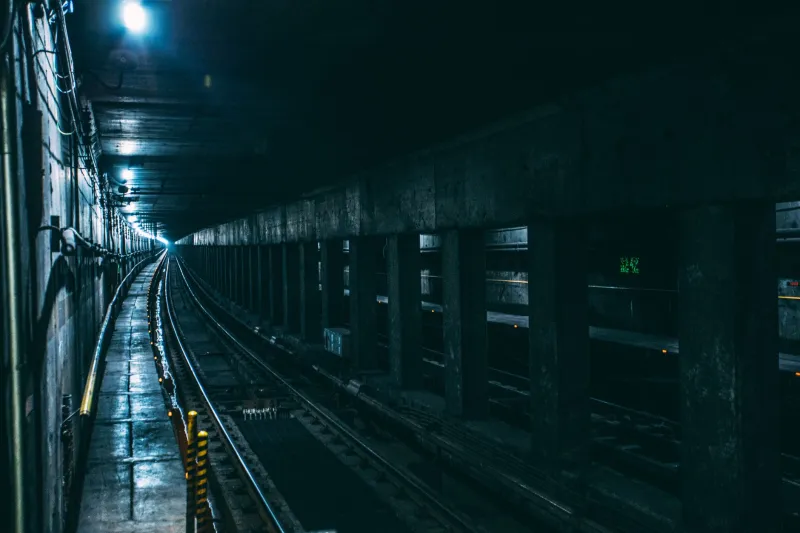
Fan communities have been vocal about wanting a New York Metro setting specifically—the subway system alone practically writes the game design doc. Whether 4A Games would go that far is another question entirely, but the appetite is clearly there.
The Wait Is Part of the Experience
Here's the honest truth about being a Metro fan in 2024: we're in the dark, and that's kind of appropriate. The franchise has always been about surviving uncertainty, pushing forward when you can't see what's ahead, and finding meaning in the journey rather than the destination.
Whatever comes next—sequel, spin-off, or something nobody's predicted yet—the foundation 4A Games built across three games is genuinely remarkable. The world is rich enough to support almost any direction they choose. The lore has depth. The tone is distinct. The fanbase is patient but hungry.
The Aurora may have reached its final stop. But the tracks keep going.