Why 22 Miles of Underground Track Built a Better Game World Than 1,000 Square Miles of Open Wilderness
Open-world fatigue is real. If you've spent the last decade climbing radio towers to unlock map icons, clearing outpost camps in procedurally generated forests, and fast-traveling across landscapes that technically have a lot of stuff in them but somehow feel hollow — you know exactly what we're talking about.
Metro 2033 launched in 2010 and went the opposite direction. No map markers. No waypoint compass. No sprawl. Just the Moscow Metro system: a real, historically documented underground network that became, in 4A Games' hands, one of the most psychologically effective environments in gaming history. The question worth asking in 2024 is why that worked so well — and what American developers can actually learn from it.
The Real Metro: A World Worth Borrowing
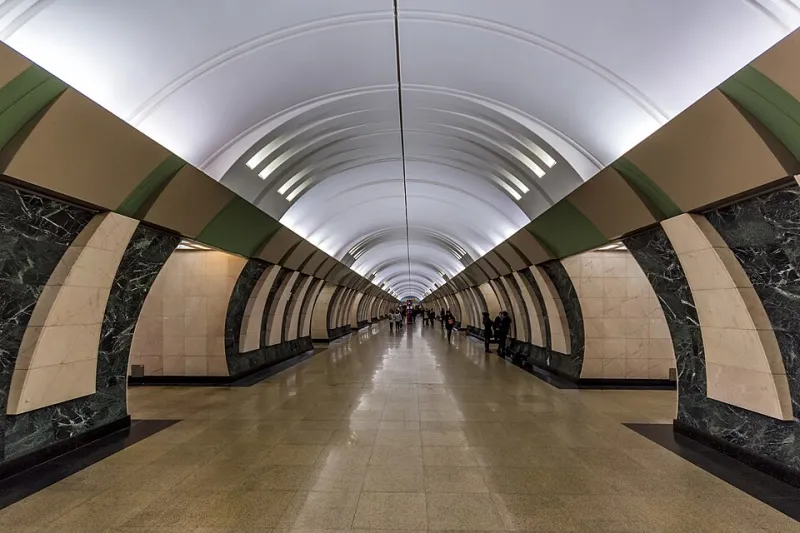
Before we get into game design philosophy, it's worth appreciating what 4A Games had to work with. The Moscow Metro isn't just a subway system — it's a cultural institution. Opened in 1935 under Stalin, it was built to double as a nuclear shelter network. The stations are famously ornate: marble floors, cathedral ceilings, chandeliers, Soviet-era mosaics. It was designed to impress, to intimidate, and yes, to survive a war.
That dual identity — beautiful civic infrastructure that was always secretly a bunker — is baked into Metro 2033's DNA. When Dmitry Glukhovsky wrote the original novel, he wasn't inventing a fictional underground city from scratch. He was taking something that millions of Russians already had an emotional relationship with and asking: what if this was all that was left?
For American players, that context lands differently. We don't have an equivalent. The DC Metro is efficient but not mythological. The New York subway is iconic but not built with apocalypse survival in mind — at least not officially. So when US players dropped into Metro 2033's world, there was an element of genuine discovery. This place felt real because it was real, and that authenticity is something you simply cannot manufacture from a concept document.
Constraint as a Design Superpower
Game designers talk a lot about player agency, and the conventional wisdom for the last fifteen years has been that more space equals more freedom equals more fun. Metro 2033 challenges that assumption pretty aggressively.
When your environment is physically constrained — when the tunnel literally only goes one direction — the designer's job shifts from filling space to controlling experience. Every sound cue matters. Every light source is a decision. The distance between you and the next threat is measured in feet, not acres, which means tension is always immediate and never abstract.
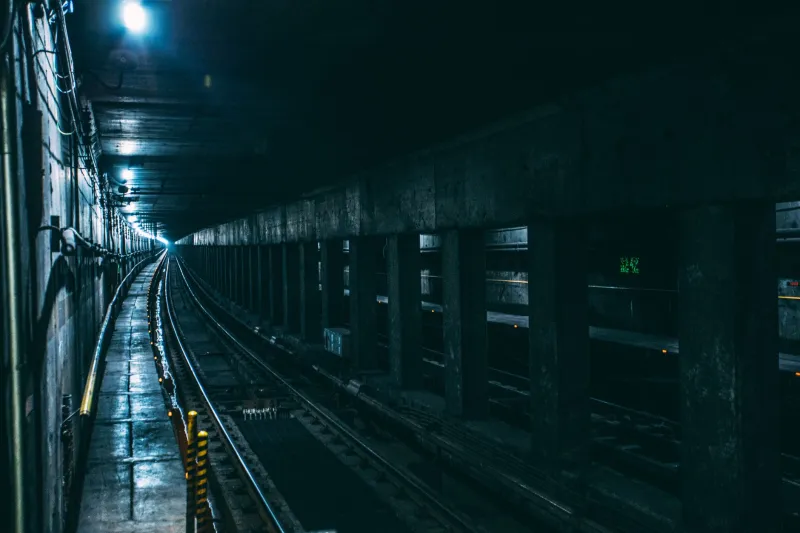
Claustrophobia is a tool here, not a limitation. The Moscow Metro's real architecture — low ceilings in maintenance tunnels, the sudden cathedral openness of major stations, the pitch-black stretches between — creates a natural rhythm of compression and release that open-world games struggle to replicate artificially. When you finally reach a lit, populated station after pushing through the dark, the relief is physiological. Your shoulders actually drop. That's environmental storytelling working at a level that no amount of ambient dialogue or collectible lore books can fully achieve.
The Psychology of Not Knowing What's Next
One of the smartest things Metro 2033 does is manage information through architecture. In an open world, you generally know what's coming — the map told you, or the quest marker told you, or you've done enough of these that you recognize the pattern. Metro strips most of that away.
Turning a corner in the Metro means genuinely not knowing what's on the other side. Is it a mutant ambush? A human faction's checkpoint? A quiet, empty stretch that somehow feels more threatening than either? The closed environment forces the game to earn every encounter because it can't dilute tension with optional side content and fast travel shortcuts.
American horror games have occasionally understood this — the original Resident Evil games, Alien: Isolation, the early Silent Hill entries — but it's rare to see it applied to a first-person shooter with Metro's level of consistency across an entire game. The commitment to the tunnel never wavers, and that commitment is what makes the world feel lived-in rather than designed.
Environmental Storytelling Without the Exposition Dump
Here's a design principle that Metro 2033 executes better than almost anything in its genre: show the world's history through the space itself, not through text logs and cutscenes.
A child's shoe in a flooded tunnel. A card game left half-finished on a table in an abandoned station. Graffiti that tells you a faction was here and then wasn't. None of this requires a quest marker or a loading screen tip. The information exists in the environment, and you absorb it through movement and observation — the same way you'd actually experience a space.
This is partly a function of the closed environment. When you can't just ride a horse to the next point of interest, you're forced to actually be in the space you're moving through. The Metro makes you a pedestrian in every sense of the word, and pedestrians notice things that riders don't.
For American developers looking to build more immersive worlds, this is probably the most transferable lesson: restraint in scale often produces depth in experience. A subway station that tells you five things about the people who lived and died there is more compelling than a five-square-mile open zone with a hundred collectible audio logs.
What Comes Next for Closed-World Design
The irony is that Metro itself moved toward more open environments with Exodus — and did it thoughtfully, using the open chapters as deliberate contrast against the game's more linear sections. The claustrophobia of the tunnel became even more effective because players had experienced the openness of the steppe.
But the core lesson from Metro 2033 remains relevant as American studios keep chasing bigger maps and longer playtimes. The Moscow Metro worked because it was honest about what it was. It didn't try to be everything. It committed to being one very specific, very carefully considered thing — a tunnel through the end of the world — and it executed that idea with enough craft and authenticity that players are still talking about it fifteen years later.
That's not a small achievement. That's a design philosophy worth stealing.