From Moscow's Tunnels to American Living Rooms: The Unlikely Rise of Metro as a Gaming Phenomenon
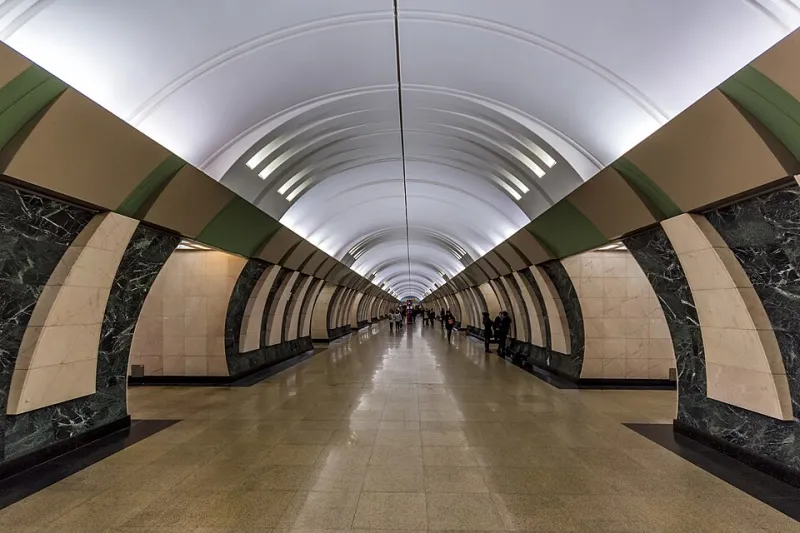
Photo: Florstein (Telegram:WikiPhoto.Space), CC BY-SA 4.0, via Wikimedia Commons
Dmitry Glukhovsky wrote Metro 2033 as a free web serial in the early 2000s, never imagining it would one day sit on the shelves of GameStop stores across America. Yet here we are — millions of US players have descended into the tunnels beneath a ruined Moscow and come back hungry for more. So how exactly did a Russian post-apocalyptic novel become one of the most beloved gaming franchises in the American market?
A Story Born Underground
Before there were bullet-currency mechanics or mutant bear encounters, there was just Glukhovsky typing away at a story set in the Moscow Metro — a real subway system so deep and sprawling that it genuinely served as a nuclear shelter during the Cold War. That historical reality gave the fiction an immediate, bone-deep credibility. When Artyom walks through those tunnels, players aren't just navigating a made-up hellscape. They're moving through a place that actually exists, reimagined as the last refuge of humanity.
The novel was published in Russian in 2002 and eventually translated into dozens of languages. By the time 4A Games — a Ukrainian studio, notably — adapted it into a video game in 2010, the source material had already built a passionate international readership. That foundation mattered. The game didn't have to invent its world from scratch. It inherited one that was already richly imagined, politically layered, and philosophically dense.
Why American Players Connected
Here's the thing about American gaming culture: we love post-apocalyptic fiction. From Mad Max to The Walking Dead to Fallout, there's a long tradition of imagining civilization's collapse and figuring out who survives. Metro fit neatly into that appetite — but it offered something different from the homegrown stuff.
Where American post-apocalyptic stories tend to sprawl outward across open landscapes, Metro compressed everything inward. The tunnels create a claustrophobic tension that's almost uniquely unsettling. There's no horizon to run toward. No open road. Just the next flickering light and whatever's lurking in the dark between here and there. For American players raised on wide-open Fallout wastelands, that shift in scale hit differently — and it hit hard.
There's also the political texture of the story. Metro's factions — the fascist Reich, the communist Red Line, the mysterious Order — read like a Cold War fever dream filtered through genuine Russian historical anxiety. American players, even those with zero background in Eastern European history, picked up on that tension intuitively. It made the world feel lived-in and ideologically complicated in a way that a lot of Western post-apocalyptic games simply aren't.
The 4A Games Effect
Credit where it's due: 4A Games did extraordinary work translating Glukhovsky's prose into interactive experience. The original Metro 2033 game launched in 2010 to solid reviews, but it was Metro: Last Light in 2013 that really started building the franchise's American fanbase into something substantial. Last Light refined the gameplay, deepened the moral system, and pushed the storytelling into territory that felt genuinely cinematic.
Then came Metro Exodus in 2019, and everything changed. Exodus broke the franchise out of the tunnels and sent Artyom and his crew across a devastated post-nuclear Russia on a modified steam locomotive. The scope was enormous. The environmental storytelling was some of the best in the medium. And critically, it arrived during a moment when American players were hungry for narrative-driven, single-player experiences — a market that games like God of War and Red Dead Redemption 2 had proven was still massive and underserved.
Exodus debuted at number two on the US sales charts during its launch week. For a franchise rooted in a Russian web novel, that's a genuinely remarkable achievement.
Storytelling That Travels
One of the most interesting questions about Metro's American success is what it says about storytelling universality. Glukhovsky's work is deeply Russian in its references, its fatalism, and its political preoccupations. And yet American players embraced it without needing a cultural decoder ring.
Part of that comes down to the fundamentals. Artyom is a protagonist built around curiosity and survival instinct — two traits that translate across every culture and every language. His journey from sheltered tunnel-dweller to someone who has seen the surface, faced the darkness, and still chosen hope is a classic hero's arc dressed in a gas mask and a Soviet-era jacket.
Glukhovsky has spoken in interviews about writing Metro as a commentary on Russian society — the tribalism, the authoritarianism, the nostalgia for a past that may not have been as great as people remember. American readers and players absorbed those themes and, consciously or not, mapped them onto their own cultural anxieties. That's what great speculative fiction does. It holds up a specific mirror and somehow shows everyone their own reflection.
The Franchise's Influence on American Post-Apocalyptic Gaming
It's worth pausing to acknowledge how much Metro has quietly shaped the genre stateside. The emphasis on environmental storytelling — using the world itself to communicate history and emotion rather than relying on cutscenes or dialogue dumps — became a template that plenty of American studios have borrowed from. The moral ambiguity baked into Metro's faction system pushed back against the clean good/evil binaries that American games often defaulted to.
Even the resource scarcity mechanics — the way Metro makes you genuinely think twice before firing a round because bullets are literally currency — influenced how designers think about survival gameplay. You can trace a direct line from Metro's tunnel economy to the crafting and scarcity systems in dozens of games that followed.
What Comes Next
With Metro Awakening arriving for VR and persistent rumors about Metro 2033 Redux updates and potential new mainline entries, the franchise shows zero signs of fading. The American fanbase that grew up with Artyom is older now, with more disposable income and a genuine nostalgia for those early tunnel runs. Meanwhile, a new generation of players is discovering the series through Game Pass, deep-discount Steam sales, and word of mouth.
Glukhovsky's underground world found its American audience through a combination of great source material, talented developers, and impeccable timing. But it's stayed relevant because the story it tells — about survival, ideology, and what it means to be human when civilization strips away — never really goes out of style.
The tunnels are always waiting. And somehow, millions of American players keep choosing to go back in.