The Kids Who Never Saw the Sun: What Metro's Children Actually Inherit
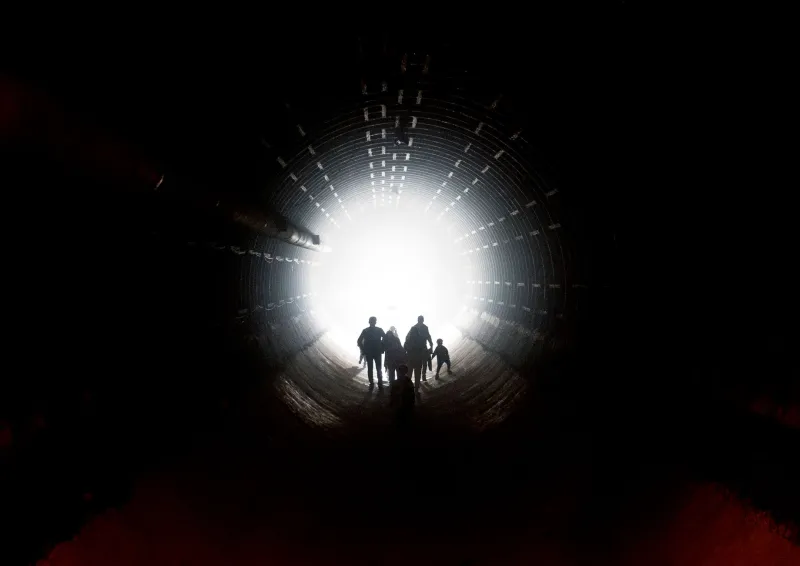
The Metro series is loud. It's gunfire and Geiger clicks and things screaming in the dark. But some of its quietest moments belong to kids — small figures standing in station corridors, repeating lessons their parents taught them about a world they will never see.
That's the thread running under the whole franchise. Metro isn't really a story about the end of the world. It's a story about what gets handed down after the end of the world, and children are the ones holding the receipt.
The Last Generation With a Memory
Start with the timeline, because it does most of the emotional work. Artyom's generation is the last one that can half-remember the surface. Not the details — a scrap of sky, maybe, the smell of rain, a voice on a radio. Everything after that is folklore.
By the time you're walking the tunnels in Metro 2033, the sky has already become a rumor. Children in the stations grow up hearing that the surface is poison, that the sun is a story, that the things up there will peel your face off. Some of that is true. Some of it is a bedtime story with a body count. And the cruelest part is that the kids have no way to tell the difference, because the adults who could check either died at the barricades or have a very good reason to keep the myth going.
What Exhibition Teaches Its Children
Artyom's home station is a farming community, and it raises its kids like farmers do everywhere: chores, inventory, weather talk. Except the weather is air pressure in the filters, and the harvest is a basement full of mushrooms and a pig that everybody is a little too fond of.
Watch how the children there behave when an outsider arrives. They're curious, then afraid, then practical. That sequence is the whole Metro childhood in miniature. Curiosity is what you're born with. Fear is what you're given. Practicality is what you're forced to learn.
The Children of the Forest
Metro Exodus took that idea to its most uncomfortable conclusion in the Taiga, where a band of orphans has built a society of its own, and its first rule is that adults are the problem.
These kids aren't monsters. They're what happens when a generation grows up watching the people who were supposed to protect them trade their futures for a bottle of something. Their distrust of grown-ups reads as paranoia right up until you remember what the grown-ups in this franchise have actually done — the purges, the labor camps, the wars fought over a ring line while the food ran out.
The Children of the Forest are the series' sharpest argument that ideology is inherited, not invented. They took the lesson the adults taught them and applied it with a child's total commitment.
The Little Dark One
Metro: Last Light complicates the picture by handing you a different kind of child — one that isn't human, and isn't innocent in any way you'd recognize. The small Dark One who follows Artyom through that game was born into a war it never chose, taught to fear a species it had never actually met.
Artyom's decision to protect it is the franchise's most radical gesture. It's the moment the series says that the cycle of inherited hatred can be broken, and that breaking it costs something. Not bullets. Attention. The willingness to treat a stranger's child as a child.
Nastya and the Train Full of Grown-Ups
In Metro Exodus, the Aurora collects a small crew of people who are all, in their own ways, trying to build a future. And then there's Nastya — Katya's daughter, a little kid who came out of a Volga church community and onto a train heading east.
On a good day, that train is the first thing in the entire franchise that looks like a school. The crew teaches her what they can. She gets a window, a route, a horizon that changes. It's not a fix. The world is still dying in every direction. But it's the first honest attempt to give a child an inheritance that isn't just a rifle and a grudge.
What Hope Actually Looks Like Here
Metro has a reputation as a bleak franchise, and it earns it. But bleakness isn't the same as nihilism. The series keeps returning to the same question: what do you pass on?
You can pass on the fear. That's what most stations do. You can pass on the ideology, which is what the Reich and the Red Line do, and it works beautifully right up until the kid grows up and starts applying it.
Or you can pass on a task. Mending something. Mapping a route. Teaching a kid to read a pressure gauge and explain it back to you. None of that saves the world. All of it keeps the door open for the possibility that the next generation has a better idea than we did.
The Inheritance Test
Here's the uncomfortable part for those of us playing above ground. Metro's kids are fictional, but the mechanism isn't. Children don't learn about the world from the news. They learn it from the adults who tell them what to be afraid of, and they'll repeat it back with total confidence for the rest of their lives.
In that sense, the Metro's children aren't a warning about the apocalypse. They're a warning about the stories we tell during ordinary times. The kids in the tunnels believe what they're told because they have no way to fact-check the sky.
Most of ours can just go outside and look up. That's an advantage, and Metro — quietly, in between all the gunfire — keeps pointing at it.