Static and Shadows: How Metro's Radio Voices Turned Background Noise Into Living History

Photo: Stephen Hanafin from Kilkenny, Ireland, CC BY-SA 2.0, via Wikimedia Commons
There's a moment in Metro 2033 — you've probably blown past it a dozen times — where you catch a fragment of radio transmission leaking out of a broken speaker mounted on a tunnel wall. It isn't quest-critical. Nobody flags it in your HUD. It's just a voice, half-swallowed by interference, speaking in a language that may or may not be Russian, saying something that may or may not be a warning. And then it's gone.
That thirty-second throwaway is doing more narrative work than most games manage in an entire cutscene.
4A Games didn't stumble into this. The way Metro deploys radio communications — fragmentary, unreliable, often untranslated — is a deliberate design philosophy that borrows heavily from Cold War-era information architecture. And understanding why it works tells you a lot about what separates Metro's world-building from the competition.
The Cold War Blueprint
American audiences have a cultural memory of radio anxiety that runs surprisingly deep. From the Emergency Broadcast System tones that interrupted Saturday morning cartoons to the nuclear drills that older generations still remember viscerally, there's something about a crackling, authoritative voice delivering incomplete information that triggers a very specific kind of dread.
The Soviet Union, which forms the cultural and geographic backbone of the Metro universe, had its own parallel relationship with radio as an instrument of control. State broadcasts were carefully managed. Shortwave frequencies were jammed. Information moved in fragments — sometimes deliberately, sometimes because the infrastructure was simply failing. When Dmitry Glukhovsky built the original novel, he understood that in a post-collapse society, the radio wouldn't deliver clarity. It would deliver noise with occasional meaning.
4A Games translated that understanding into something interactive. The radio chatter you hear throughout the Metro franchise — faction communications, distress signals, coded messages between stations — is almost never fully resolved. You get pieces. You get implications. The game trusts you to feel the weight of what you can't quite hear.
Fragmentation as a Feature
Here's what most game audio design gets wrong: it treats ambient sound as set dressing. Background music establishes mood. Environmental audio confirms location. Dialogue delivers information. Everything has a lane, and everything stays in it.
Metro collapses those lanes on purpose.
When you overhear a Ranger transmission in Last Light, you're not just getting atmosphere — you're getting an unreliable narrator. The information is real, but it's incomplete, filtered through whatever equipment survived the apocalypse and whatever political agenda the sender carries. That's not a bug in the world-building. That's the point. In a society where every faction controls its own information ecosystem, radio communications are inherently propagandistic. Even the static means something.
This mirrors how information actually travels in authoritarian or collapsed-state environments. Rumors move faster than facts. Coded language develops out of necessity. Silence itself becomes a kind of broadcast. Metro's audio designers understood this, and they built a soundscape that behaves accordingly.
What It Does to the Player
From a psychological standpoint, incomplete information is more stressful than no information. This is well-established in cognitive research — the brain works harder to fill gaps than to process complete data. When Metro feeds you a half-heard transmission about something moving through Sector 7, your imagination does the rest. And your imagination, working with everything the game has already shown you, is going to construct something worse than whatever 4A could have explicitly rendered.
This is a fundamentally different approach to tension than what you get in, say, a Fallout game, where radio broadcasts tend toward the explanatory. Three Dog on Galaxy News Radio is charming, but he's also telling you things. He's reducing ambiguity. Metro's radio voices increase it.
The result is a player who leans in. Who pays attention to things that aren't required. Who develops a habit of listening carefully to environments that most games train you to ignore. That's a remarkable behavioral shift, and it happens almost invisibly.
Metro Exodus and the Long Silence
Exodus complicates the radio dynamic in interesting ways. As Artyom and the Aurora crew move east across a Russia that's larger and more varied than the tunnels of Moscow, radio communications become rarer and stranger. Regional dialects. Signals that seem to be on a loop, broadcasting from stations that may have been abandoned for years. The question of whether anyone is actually on the other end of a given frequency becomes genuinely unsettling.
There's a sequence in the Caspian chapter where you pick up what sounds like a children's broadcast — music, a calm voice, something almost cheerful — that is so tonally wrong for the environment that it lands harder than any jump scare. The game doesn't explain it. It doesn't need to. You've been trained by that point to understand that in Metro's world, a friendly voice on the radio is often the most dangerous thing you can hear.
Why This Matters Beyond Metro
The broader gaming industry has gotten better at environmental audio over the past decade, but the specific technique Metro employs — using radio communications as a tool of deliberate epistemic frustration — remains rare. Most developers are too worried about clarity. Too concerned that players will feel lost or cheated if they can't resolve every audio cue into a clean piece of information.
Metro bets that players are smarter than that. It bets that the feeling of being a survivor in a world where information is scarce and trust is expensive is more compelling than the feeling of being a protagonist in a world that explains itself on demand.
That bet has paid off across three mainline games and a dedicated fanbase that still argues about what specific transmissions mean. When a gaming community is parsing audio like it's the Zapruder film, you've built something that works.
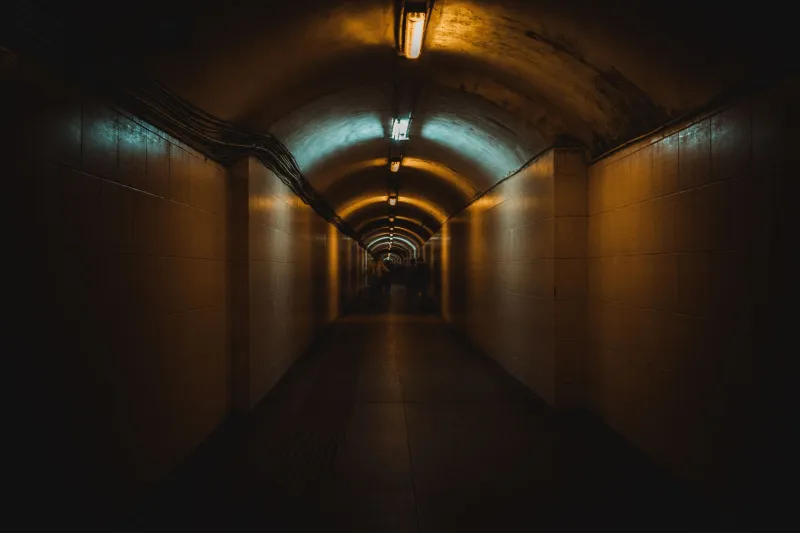
The tunnels are dark. The voices on the radio are broken. And somehow, that's exactly what keeps drawing us back in.