The Art of Going Quiet: How Metro's Stealth Outclasses Shooters That Cost Twice as Much

Photo by Photo by Samuel Berner on Unsplash on Unsplash
Somewhere between the fourth time you've held your breath while a patrol guard walked three inches from your crouched body, and the moment you realized you'd been gripping your controller hard enough to leave marks—that's when Metro's stealth clicks. Not with a bang. Not with a slow-motion kill cam. Just with the quiet, nauseating realization that you almost died, and nobody in the game even knew you were there.
That feeling? Mainstream AAA shooters spend hundreds of millions of dollars trying to manufacture it and mostly fail. Metro does it with a lighter, a wristwatch, and enemy AI that feels just smart enough to make you genuinely paranoid.
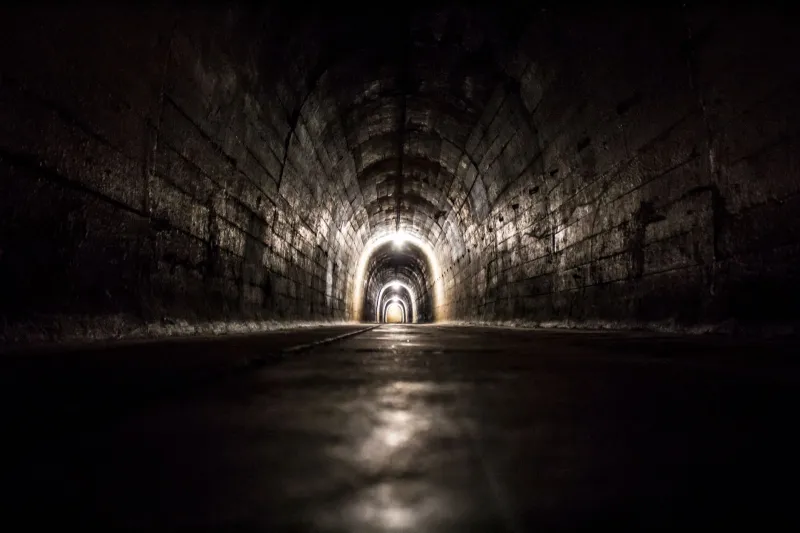
Let's talk about why Metro's approach to stealth is one of the most underappreciated design achievements in the genre—and why sneaking through a pitch-black tunnel hits harder than any set-piece explosion modern shooters have to offer.
The Lighter Changes Everything
Start with the basics. Metro's stealth system is built around light in a way that most games only gesture at. You're not just looking for shadows to hide in—you're actively managing your own visibility. The wrist-mounted light meter tells you how exposed you are. The flame on your lighter tells enemies exactly where to look. Even firing a suppressed weapon generates enough light from the muzzle flash to potentially give away your position.
This is not how most stealth games work. In something like Far Cry or even the Call of Duty campaigns that occasionally flirt with stealth sections, darkness is decoration. It's aesthetic. The actual detection system usually runs on a cone-of-vision model that ignores ambient light entirely. You're hidden because you're outside the cone. Simple.
Metro makes light a resource you manage the same way you manage bullets or filters. Do you light your lamp to navigate better, knowing it makes you visible? Do you move slower in complete darkness to stay hidden, knowing every second you spend underground is a second your filter is running down? The tension isn't manufactured by scripted enemy patrols. It's baked into the resource economy of the game itself.
Enemy AI That Rewards Patience
Here's something Metro does that most shooters quietly gave up on years ago: enemies actually investigate. Not in the scripted, thirty-second-timer, reset-to-patrol kind of way. When a guard in Metro hears something suspicious, they act like something suspicious happened. They call out to their buddies. They move toward the source. They stay alert for longer than feels comfortable.
That behavioral persistence is what separates Metro's AI from the kind of goldfish-memory NPCs that make stealth feel trivial in other games. You throw a bottle to distract a guard in Metro: Last Light, and you've bought yourself maybe fifteen seconds and a repositioned enemy—not a clear path. You have to think about where they'll end up, not just where they are right now.
The result is that stealth in Metro requires actual spatial reasoning. You're not just waiting for the patrol pattern to create a gap. You're modeling the guard's behavior, predicting how they'll react to stimuli, and building a mental map of the room that accounts for multiple possible outcomes. That's a genuinely higher cognitive load than "wait for the gap and run," and it makes every successful ghost run feel earned rather than discovered.
Level Design That Rewards the Patient Player
Metro's tunnel environments could have been a liability. Narrow corridors don't naturally lend themselves to stealth gameplay—there's nowhere to go, nowhere to flank, and very little room for improvisation. 4A Games turned that constraint into the entire point.
Because the spaces are tight, every decision about positioning carries more weight. Choosing to neutralize a guard silently versus letting them live and walk a different route isn't just a tactical option—it reshapes the entire geometry of the encounter. Kill the guard by the door, and now you can use that door. Leave him alive, and you've got a moving obstacle that might walk into your next position.
The human settlements in the Metro games—the bandit camps in Last Light, the cult compounds in Exodus—are particularly well-designed around this idea. They're structured like real spaces that people actually inhabit, not combat arenas with patrol routes bolted on. Guards congregate near heat sources. Sightlines are blocked by shelving and hanging fabric. The environments have a logic that you can learn and exploit, which makes stealth feel like genuine problem-solving rather than pattern recognition.
The Psychological Weight of Non-Lethal Play
There's a dimension to Metro's stealth that almost never gets discussed, and it's the one that makes it genuinely different from the competition: the moral cost of the alternative.
Metro's karma system—never quite spelled out, always operating in the background—responds to how you treat human enemies. Knock them out and leave them breathing, and you're accumulating something. Kill everyone you encounter, and you're accumulating something else. The game doesn't lecture you about it. There's no cutscene where a character explains that murder is bad. The consequences show up in the ending, quietly, without fanfare.
That design choice reframes stealth as an ethical decision rather than just a tactical one. You're not sneaking past guards because it's easier or because you want a higher score. You're sneaking past them because shooting everyone in your path has a cost that you might not see until it's too late to change course. That's a level of narrative integration that most AAA games don't even attempt.
Compare that to the stealth sections in something like Call of Duty: Modern Warfare's campaign—technically competent, atmospherically effective, but ultimately consequence-free. You sneak because the game told you to sneak. In Metro, you sneak because you made a choice about what kind of survivor you want to be.
Why Nobody Talks About This
Part of the reason Metro's stealth doesn't get the recognition it deserves is a marketing problem. The franchise has always been sold, at least partially, on its atmosphere and its story—the tunnels, the monsters, the post-nuclear Russian aesthetic. The combat, including the stealth, tends to get treated as a secondary selling point.
But for players who've gone back through Last Light or Exodus specifically trying to ghost their way through, the experience is revelatory. The systems hold up. The AI is consistent. The level design supports multiple approaches without feeling like it was designed by committee to hit a checklist.
Metro isn't trying to be Splinter Cell. It's not trying to be Hitman. It built a stealth system that serves its specific world—desperate, quiet, morally complicated—and it executed that system better than most games that put stealth front and center on the box.
Next time you're loading up any game in the franchise, try putting the gun away for a while. Move slow. Watch the light meter. Hold your breath.
You might be surprised how loud the silence gets.