Tunnels of Truth: How Well Does Metro Actually Know Its Underground?
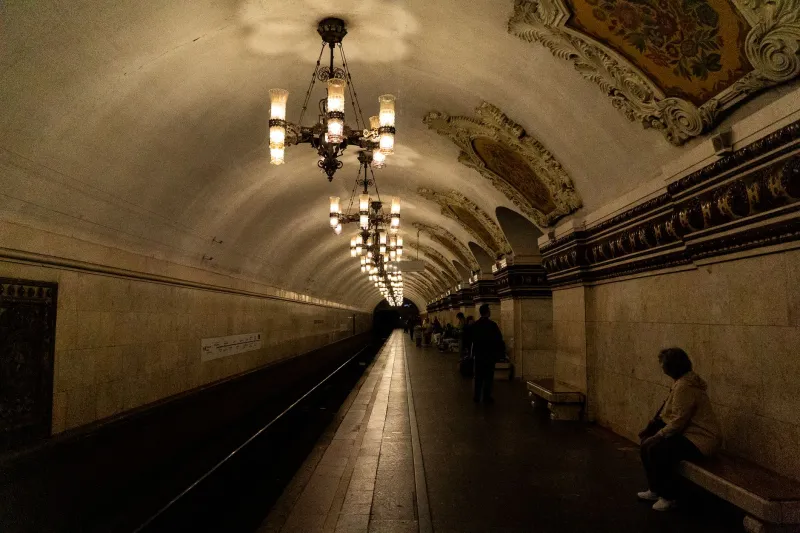
There's a reason Metro 2033 hits differently than most post-apocalyptic games. It doesn't drop you in a crumbling city or a sun-scorched wasteland. It puts you underground — in the dark, in the tight, in the genuinely claustrophobic architecture of a real transit system. The Moscow Metro isn't just a backdrop. It's the whole premise. Humanity survives because the tunnels exist, and the tunnels exist because Soviet-era engineers built them deep, wide, and tough enough to outlast almost anything.
But how much of that premise actually holds water? We spent some time digging into the real engineering behind subway systems — talking to transit professionals and cross-referencing what the games show us against what actual underground infrastructure looks like — and the results are genuinely fascinating. Metro gets a surprising amount right. And where it gets things wrong, it gets them spectacularly wrong in ways that are honestly kind of fun to think about.
The Moscow Metro Is Actually Built for This
Here's the thing most American players might not immediately appreciate: the Moscow Metro was, in part, designed with civil defense in mind. During the Soviet era, deep-line stations were constructed at depths that would provide meaningful protection from aerial bombardment. Some stations sit more than 180 feet below street level. By comparison, the New York City subway — which most US players probably use as their mental reference point — averages somewhere around 30 to 40 feet underground on most lines.
That depth distinction matters enormously for Metro's premise. When Artyom's world ends in nuclear fire, the people who survive aren't just lucky — they're benefiting from deliberate Cold War infrastructure planning. Civil engineers who've studied Soviet transit systems note that the deep-bore tunnels of lines like the Koltsevaya (Circle Line) were built with reinforced blast doors and emergency ventilation systems that genuinely would have offered some protection during a catastrophic surface event. Metro the game leans into this, and it's not wrong to do so.
The blast doors you encounter throughout the games? Real. The Moscow Metro actually has sealed emergency doors at many station entrances. The general principle that stations could function as shelters? Historically grounded. That's a stronger foundation than most fictional universes ever bother to build.
Where the Architecture Gets Fuzzy
Now here's where things get interesting — and a little creative. The stations in Metro 2033 and its sequels are depicted as functioning communities: markets, living quarters, farms, workshops, entire political factions operating out of what are essentially underground train platforms. It looks incredible. It also requires some serious suspension of disbelief from an engineering standpoint.
Real subway stations, even the grand Soviet-era showpieces with their marble columns and ornate mosaics, are not designed for long-term habitation. The ventilation systems that exist are meant to manage heat generated by trains and passenger movement — not to circulate enough fresh air for hundreds of sleeping, cooking, and farming humans over years or decades. Transit infrastructure specialists point out that carbon dioxide buildup alone would become a critical problem within days in a sealed station, let alone the challenges posed by sanitation, water supply, and the structural demands of converting platforms into living floors.
The games do gesture at improvised ventilation solutions, and Dmitry Glukhovsky's original novel spends more time on the grim logistics of underground survival than the games can reasonably depict. But if you're looking for a one-to-one simulation of what actually living in a subway station would be like, Metro is giving you the highlight reel. The reality would involve a lot more engineering problems and a lot less dramatic gunfighting.
Tunnel Dimensions and the Feel of Movement
One area where the games genuinely shine is in how movement through the tunnels feels. Standard Moscow Metro tunnel bores run roughly 18 to 20 feet in diameter — enough to feel oppressive when you're on foot with a headlamp and a shotgun. The games capture that sense of compressed, directional space extremely well. You're not wandering through cavernous underground highways. You're moving through tubes, and the geometry of that shapes everything about how combat and exploration work.
American players who've spent time in older sections of the Chicago L or the Boston T might recognize a similar sense of tight, purposeful construction — these systems weren't built for comfort, they were built for function, and function means efficiency of space. Metro translates that quality faithfully. The tunnel sections feel like tunnels, not like corridors with a train-track texture slapped on.
The branching tunnel networks and interconnected station layouts in the games are also reasonably plausible, at least in broad strokes. Real metro systems have service tunnels, maintenance corridors, and cross-passages between lines that don't appear on any public map. The idea that survivors could discover and exploit these hidden connections for travel and trade is one of Metro's most believable worldbuilding choices.
The Farm Problem
Let's talk about the mushroom farms, because they deserve their own moment. Throughout the Metro games, underground settlements sustain themselves partly through fungal agriculture — growing mushrooms in the low-light, high-moisture environment of the tunnels. From a pure biology standpoint, this is one of the smarter survival details in the entire franchise. Certain mushroom species genuinely do grow in low-light conditions and don't require soil in the traditional sense.
The problem is scale. The games imply that mushroom cultivation, along with pig farming and other underground agriculture, can sustain populations of hundreds or thousands of people indefinitely. Agricultural scientists would point out that the caloric yield from mushroom farming alone wouldn't come close to covering that demand, and the organic material needed to sustain fungal growth at that scale would itself require constant replenishment. The pigs need to eat something. The mushrooms need substrate. It's a closed-loop problem that the games wisely don't linger on, because the answer is pretty grim.
The Verdict: Earned Authenticity With Strategic Blind Spots
Here's the honest takeaway: Metro earns its credibility on the big stuff. The choice of Moscow's deep-bore subway as the setting isn't arbitrary — it's historically and architecturally informed in ways that give the entire premise a real backbone. The depth, the blast protection, the actual existence of civil defense infrastructure in Soviet transit design — all of that is real, and the franchise is smart to build on it.
Where the games take liberties, they do so in service of storytelling and gameplay rather than out of ignorance. Turning a subway platform into a functioning town is a narrative necessity, not a factual claim. The franchise knows it's making a world, not a documentary.
For American players especially, it's worth appreciating how specifically Moscow this all is. The New York subway, the Chicago L, the DC Metro — none of them would support this premise the way the Moscow system does. The depth alone changes everything. Metro isn't just a post-apocalyptic game that happens to be set underground. It's a game that picked exactly the right underground, and that choice holds up.