Bullets Don't Lie: Why Metro's Military-Grade Currency Is the Most Honest Economy in Gaming
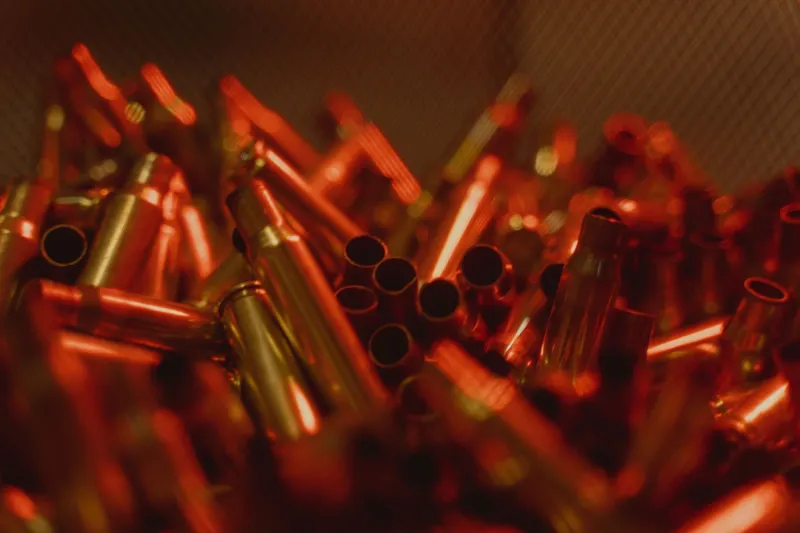
There's a moment every Metro player knows. You're low on military-grade rounds — the good ones, the pre-war ones that actually punch through mutant hide — and you've got two options. Spend them in the firefight ahead and walk into the next station broke, or holster up and try to talk, sneak, or knife your way through. The game never tells you what the right call is. It just makes sure you feel the weight of whichever one you pick.
That's the genius of Metro's economy, and honestly, it deserves a lot more credit than it gets in the broader conversation about post-apocalyptic game design.
How a Bullet Becomes a Dollar Bill
For anyone who hasn't spent time in the tunnels, here's the setup. In the Metro universe — built on Dmitry Glukhovsky's novels and brought to life across three mainline games — the survivors living beneath a nuclear-ruined Moscow settled on military-grade ammunition as their primary unit of trade. Not bottle caps. Not crafted tokens. Not some in-game credit system with a made-up name. Actual bullets.
The logic is brutally coherent. After civilization collapses, traditional currency becomes worthless paper almost overnight. What holds value? Things people need to survive. And in a world crawling with mutants and hostile factions, pre-war ammunition — manufactured to standards no post-apocalyptic workshop can replicate — becomes the most universally trusted commodity anyone can carry.
This isn't just worldbuilding flavor. It's a load-bearing mechanic that changes how you play the entire game.
The Impossible Math of Every Firefight
Here's where Metro separates itself from the competition. In most shooters, ammo is a resource you manage to keep yourself alive. In Fallout, caps are currency and bullets are fuel. The two systems run parallel but rarely intersect in a way that creates genuine moral friction. In The Last of Us, crafting materials are scarce and precious, but they don't double as something you'd spend at a vendor twenty minutes later.
Military rounds in Metro are both things simultaneously. Every time you line up a shot with your best ammunition, you're not just making a tactical choice — you're making a spending decision. It's the equivalent of cracking open your emergency savings account to pay for dinner. Technically you can do it. But you'll feel it later.
This creates a specific kind of stress that's genuinely rare in gaming. Players who are used to hoarding their best ammo for boss fights suddenly have to recalibrate. That stash of military-grade rounds you've been saving? Merchants in the next station want those. Upgrades cost those. Bribes sometimes cost those. The game is constantly asking you to choose between firepower now and financial stability later, and it never lets you forget that those are the same resource.
What It Actually Says About Economic Collapse
Glukhovsky didn't pull this idea out of thin air. The concept of ammunition-as-currency maps pretty cleanly onto real economic collapse theory — specifically the idea that in a true breakdown of societal infrastructure, value reverts to tangible utility rather than symbolic representation.
Historians and economists who study hyperinflation scenarios — Weimar Germany, Zimbabwe, post-Soviet states — consistently point to the same pattern: when trust in institutional currency evaporates, people reach for things with inherent usefulness. Cigarettes. Alcohol. Canned food. Weapons and the means to use them.
Military-grade ammunition in Metro hits every checkbox. It's durable, portable, universally recognized, difficult to counterfeit, and critically useful in a world where something is always trying to kill you. The Metro economy isn't a fantasy — it's a pretty reasonable extrapolation of what happens when the social contract dissolves and people have to build something new from the rubble up.
For American players especially, there's a particular resonance here. Debates about resource scarcity, the fragility of financial systems, and what people would actually trade when paper money stops meaning anything aren't abstract concepts in the US. They come up in survivalist communities, in disaster preparedness circles, in conversations that follow every major economic shock. Metro takes that anxiety and turns it into gameplay, which is a genuinely smart move.
How Other Games Handle This (And Why They Usually Blink)
Fallout is the obvious comparison point, and it's instructive. The bottle cap economy in that franchise is clever and iconic, but it's also fundamentally consequence-free in a way Metro isn't. Caps and bullets exist in separate lanes. You spend caps to get better at killing things, and then you go kill things with bullets. There's tension in resource management, sure, but the two systems don't eat each other.
Dying Light uses a similar separation — money is money, crafting materials are crafting materials, and while the game does a good job of making resources feel scarce, spending on one system doesn't directly cannibalize the other.
Even survival games like DayZ or The Long Dark, which pride themselves on brutal resource management, tend to keep currency and combat supplies in different mental buckets. You're always thinking about them separately.
Metro refuses to let you do that. It collapses the distance between your wallet and your weapon, and the discomfort that creates is the whole point.
The Strategy Layer Nobody Talks About Enough
Once you internalize what the bullet economy actually means, Metro becomes a fundamentally different game. Stealth stops being just a playstyle preference and starts being a financial strategy. Every enemy you avoid is money you didn't spend. Every time you choose the knife over the rifle, you're making a deposit.
This is why Metro's stealth system feels so purposeful compared to games where sneaking is just the "cool" option for players who want to feel like a ninja. In Metro, the incentive structure is baked into the economy. The game doesn't have to tell you that staying quiet is smart — it just makes noise expensive.
For players who want to optimize, the whole run becomes a kind of resource audit. How much am I earning per station? How much am I spending per encounter? Is this upgrade worth the trade-off in liquid ammunition? It's surprisingly sophisticated for a game that most people encounter as a tense corridor shooter.
Why This Detail Still Matters
Metro's bullet economy is, at its core, an argument about what things are worth when the structures we use to assign value stop working. It's a mechanic that earns its place in the fiction because it reflects something true about human behavior under pressure.
And it creates gameplay tension that hits different because it's personal. Your resources aren't abstract. They're not credits on a screen. They're the same objects you're chambering into your weapon, and every choice you make with them is a choice you'll live with for the rest of the run.
That's not just good game design. That's Metro doing what it does best — using the apocalypse to hold a mirror up to something real, and making sure you can't look away.