The Clock Is Already Broken: Why Metro's Dying-World Timeline Hits Harder Than Any Three-Act Story
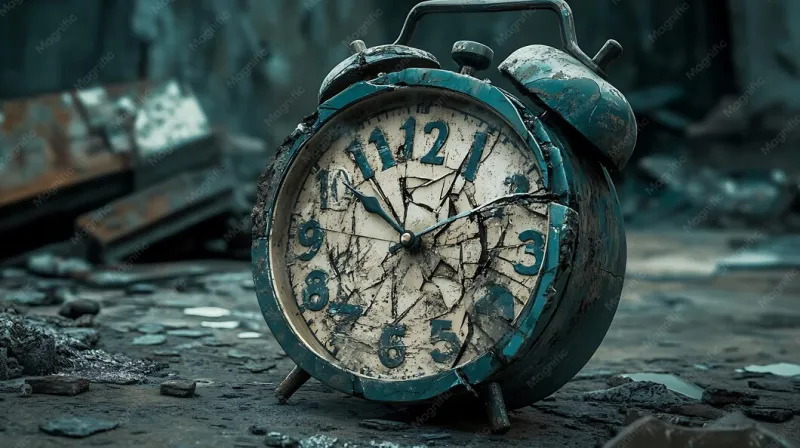
Photo: broken clock post-apocalyptic ruins dramatic lighting, via img.freepik.com
Let's be honest about something. The three-act story structure works. It works in movies, it works in novels, and it works in games. Hero has a goal, hero faces obstacles, hero resolves the conflict. Clean, satisfying, repeatable. There's a reason it's been the default template for Western narrative since Aristotle was handing out notes.
But Metro doesn't care about your three acts. Metro gives you a world that is already in the process of ending when you arrive, and it never lets you forget that the clock isn't counting down to a dramatic confrontation — it's counting down to extinction. That's a fundamentally different narrative architecture, and it produces a fundamentally different emotional experience.
Let's dig into why.
What a Deadline Actually Does to a Story
The ticking clock is one of the oldest tricks in the thriller playbook. Bomb under the table, ransom demand, the asteroid that hits in 48 hours. The mechanism is simple: attach a specific, irreversible consequence to a specific moment in time, and suddenly every scene before that moment carries extra weight.
But most games that use countdown mechanics are operating on a local level. The deadline applies to this mission, or this chapter, or this villain's plan. Beat the clock, resolve the immediate crisis, and the world resets to something stable. You've earned your ending.
Metro doesn't offer that reset. The franchise's central premise — that humanity survived a nuclear apocalypse by retreating underground, and is now slowly losing the fight against mutation, resource depletion, and its own tribal violence — is a deadline with no pause button. The Aurora's journey in Exodus isn't racing toward a solution to the apocalypse. It's racing toward whatever comes next in a world that has already lost.
That distinction matters enormously.
Knowing the Expiration Date Changes What You Notice
Here's a thing that happens when you play Metro with this framework in mind: you start paying attention to different things than you would in a game where the world feels stable.
In a game like The Witcher 3, the world is troubled but essentially permanent. Civilizations rise and fall, but there's a sense that Novigrad will still be there after you're done adventuring. You can care about individual stories without feeling like you're watching the last chapter of everything.
In Metro, every functioning community you encounter carries the implicit question: how much longer? The station markets, the children playing in the tunnels, the couples arguing about rationing — all of it exists against the backdrop of a civilization that is statistically unlikely to survive another generation. When you stop to listen to two Hansa traders bicker about the price of ammunition, you're not just getting flavor text. You're watching people try to maintain the rituals of normal life inside a countdown they can't see.
That reframes the entire experience. You're not just a player moving through a world. You're a witness.
How This Affects Player Decision-Making
From a pure strategy standpoint, Metro's dying-world timeline creates a specific kind of decision pressure that open-ended games can't replicate.
When you're choosing whether to spend your last military-grade rounds on a fight you might be able to avoid, you're not just doing resource math. You're weighing your own survival against the small, finite supply of things that keep humanity functional in these tunnels. The moral weight of Metro's economy — something this site has explored before — connects directly to the timeline. Resources aren't just scarce because the game is difficult. They're scarce because the world is running out of them. Permanently.
This changes the calculus on stealth, on dialogue choices, on which side missions you pursue. In a game where the world has a future, you can afford to be reckless and course-correct. In Metro, recklessness feels like you're accelerating something that's already in motion.
The Aurora as a Metaphor That Actually Works
Exodus crystallizes all of this through the Aurora itself — a train moving east through a Russia that's simultaneously post-apocalyptic and still somehow alive. The journey has a destination, but the destination isn't salvation. It's possibility. The best Artyom's crew can hope for is finding somewhere that might sustain human life for a little while longer.
That's not a three-act story. That's something closer to The Grapes of Wrath than Die Hard. The Joads aren't racing to beat a villain. They're trying to survive long enough for something worth surviving to still exist. Metro Exodus has more in common with that American literary tradition than most people give it credit for — and American players who grew up on stories about westward movement and frontier survival often respond to it on a gut level they can't quite articulate.
The Aurora's countdown isn't a timer. It's a reminder that hope and urgency aren't opposites.
Why Other Games Should Take Notes
The gaming industry has a comfort problem. We build worlds and then make them feel permanent because permanence is less stressful to design around. Open worlds especially tend toward the eternal — there's always another quest, another region, another season pass. The world will wait for you.
Metro's world won't wait. And that impatience is the source of almost everything that makes it emotionally distinct.
If you've ever finished a Metro game and felt something heavier than satisfaction — something that lingered for a day or two, made you think about things that had nothing to do with gaming — that's the dying-world timeline doing its work. It's not trying to depress you. It's trying to make you feel the weight of what's at stake when the clock is already broken and the only question left is what you do with the time that remains.