Small Budget, Massive Soul: How Metro Keeps Embarrassing the AAA Juggernauts
Something quietly embarrassing happens every few years in the gaming industry. A studio with a fraction of the resources — working out of Kyiv rather than some gleaming California campus — ships a game that makes you feel things that a $300 million production couldn't manage. Metro does this repeatedly, almost casually, and the rest of the industry still hasn't figured out why.
Let's talk about that.
The Spectacle Trap
Big-budget gaming has a spending problem, and it's not just about money. It's about what money encourages. When a publisher greenlights a nine-figure development budget, the pressure to justify every dollar pushes teams toward scale — bigger maps, more cutscenes, louder set pieces, celebrities doing voice work. The logic makes sense on paper. If you spent $200 million making something, it should look like $200 million.
But somewhere in that math, the actual player gets lost.
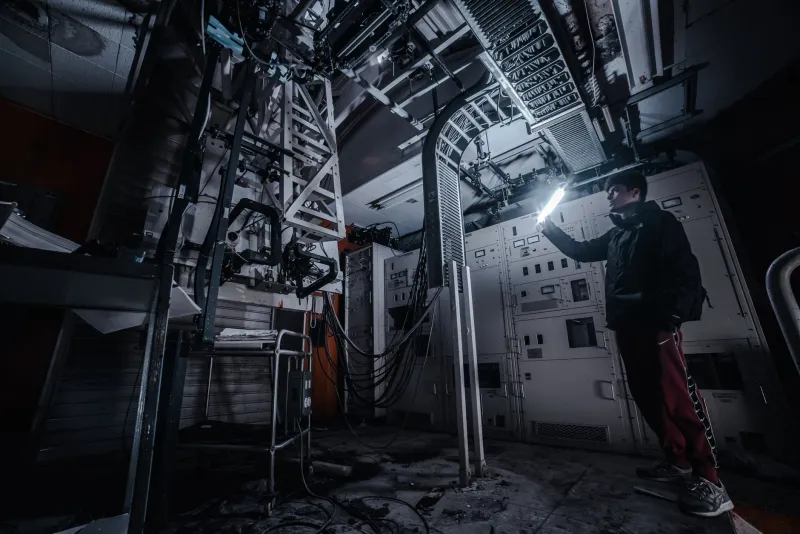
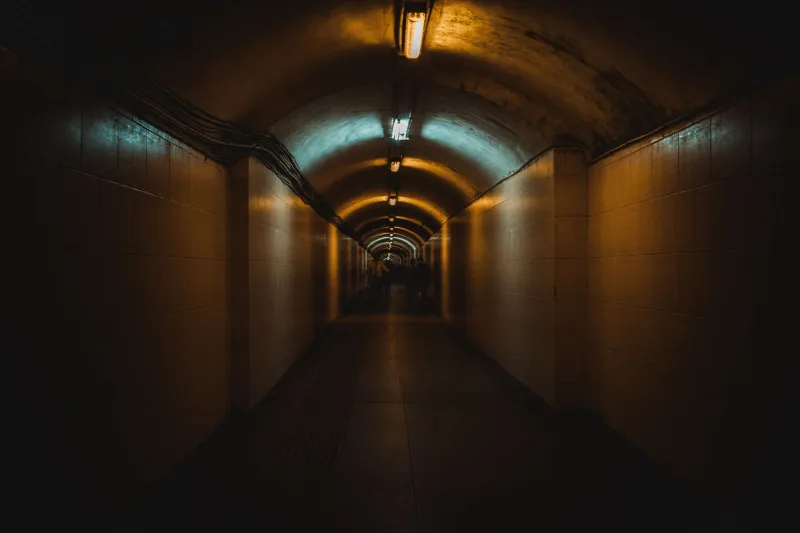
Consider what Metro does instead. 4A Games builds tight, intentional corridors — literal and metaphorical — that force you into confrontation with the story. There's no open-world padding to dilute the tension. There's no side-quest checklist pulling your attention away from Artyom's desperate crawl toward survival. Every design decision serves the same master: making you feel what it would actually be like to live in this broken world.
That focus is rare. In AAA development, it's nearly extinct.
What 4A Games Actually Understands About Players
Here's the thing about player psychology that Metro's developers seem to grasp intuitively: immersion isn't built through volume. It's built through consistency.
When a game's systems, narrative, and atmosphere all pull in the same direction, something clicks in the player's brain. The world stops feeling like a product and starts feeling like a place. Metro nails this at almost every turn. The way ammo doubles as currency. The way your gas mask fogs and cracks under pressure. The way NPCs have full conversations you can eavesdrop on if you just stand still for a moment. None of these elements are individually groundbreaking, but together they create a coherent psychological space that most blockbusters never achieve.
Compare that to a typical AAA open-world shooter, where the gruff protagonist cracks jokes between massacres, the economy makes no internal sense, and the world conveniently pauses its drama whenever you wander off to collect feathers or whatever. The tonal whiplash alone is enough to break immersion every twenty minutes.
4A Games doesn't let that happen. They can't afford to, financially or artistically, and the constraint makes them better.
The 'Enough' Principle
There's a concept in narrative design sometimes called the 'enough' principle — the idea that a story needs just enough detail, just enough world-building, just enough mechanical complexity to feel complete. Add too little and it feels shallow. Add too much and it collapses under its own weight.
Metro lives in that sweet spot almost effortlessly. The Moscow Metro's lore is rich enough to feel real without requiring a wiki to navigate. The combat is deep enough to reward smart play without demanding a PhD in ability trees. The story raises genuine moral questions without stopping every twenty minutes to explain what you're supposed to feel about them.
Big studios chronically overshoot this line. They mistake abundance for quality. More dialogue options, more weapon mods, more map icons — and somehow the experience ends up feeling less because of it. There's a reason people talk about Metro's quieter moments more than most games' biggest explosions.
The Lessons Nobody's Learning
Here's where it gets frustrating for anyone paying attention to the industry. Metro's approach isn't some secret formula locked away in a Ukrainian server room. It's observable, analyzable, and theoretically replicable. Focused scope. Atmospheric consistency. Mechanical systems that reinforce narrative themes. Restraint.
And yet, cycle after cycle, major publishers keep shipping bloated experiences that prioritize marketing screenshots over moment-to-moment player experience. They keep hiring armies of writers to produce thousands of lines of ambient dialogue while the actual story structure crumbles. They keep building worlds that look incredible in trailers and feel hollow after ten hours.
Meanwhile, whenever a new Metro entry drops, the conversation among players inevitably circles back to the same observations: it just feels different. It feels like someone cared about the whole thing, not just the parts that would look good in a preview build.
Why This Matters for Gaming's Future
This isn't just about defending Metro — though honestly, Metro deserves more defense than it typically gets in mainstream gaming circles. This is about what the industry's spending habits are doing to the medium.
When blockbuster failures are written off as market corrections rather than design failures, nothing changes. When studios with Metro's discipline get lumped into the 'mid-tier' category like it's an insult, the incentive structure stays broken. Players end up getting more of the same expensive, hollow spectacle while genuinely crafted experiences fight for shelf space.
The good news is that players are increasingly voting with their wallets and their word-of-mouth in ways that suggest the tide might be shifting. Games built with Metro's philosophy — focused, atmospheric, mechanically honest — keep punching above their weight in cultural staying power. People are still talking about Metro 2033 more than a decade after its original release. Can you say the same for most of the $200 million productions that launched the same year?
Surviving the darkness, it turns out, doesn't require a massive budget. It requires knowing exactly what you're doing in it.